NOVEMBER 24, 2025
Construction for the College Lake Dam Removal
& Stream Restoration Project is Complete
Construction for the College Lake Dam Removal & Stream Restoration Project is complete, marking a significant milestone in the City of Lynchburg’s commitment to public safety and environmental stewardship.
The removal of the high-hazard College Lake Dam, a top City priority following the August 2018 overtopping of the dam during a major storm event, has eliminated a long-standing safety risk to the community. Following the dam’s removal during the early stages of this construction project in May 2024, College Lake Dam has been delisted as a high-hazard dam, and downstream areas of Blackwater Creek no longer face an inundation risk from a potential dam failure.
“This project was first and foremost a public safety project,” said Erin Hawkins, Water Quality Manager for Lynchburg Water Resources, who served as the project manager for the City. “Removing the risk that this dam presented to people, property, and infrastructure downstream of the old College Lake is a tremendous achievement for the City and our partners in this effort.”
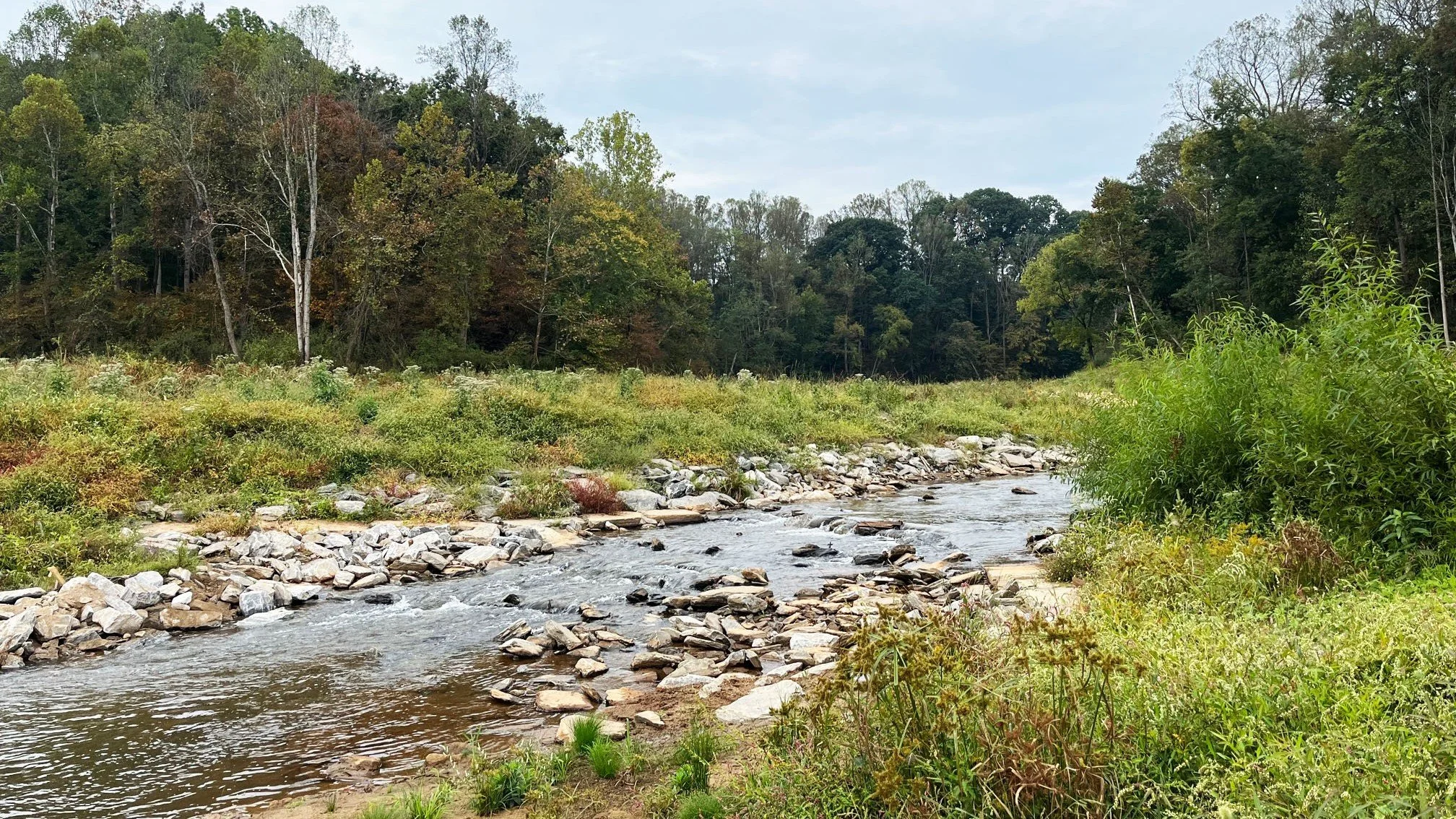
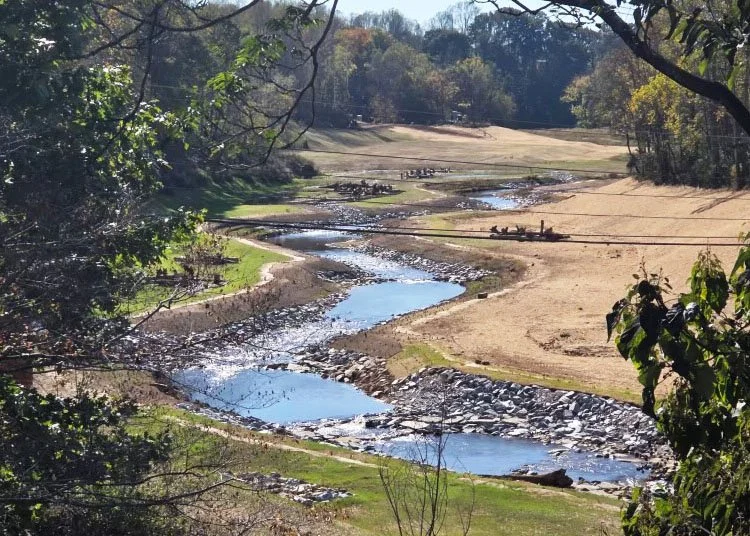
The dam’s removal resulted in the re-emergence of Blackwater Creek through the former lakebed of College Lake, reconnecting the upstream and downstream sections of the creek for the first time in 90 years.
The project’s construction since the final breaching of the dam has focused on restoration of the former lakebed of College Lake into a resilient, thriving ecosystem. This phase of construction has included:
· Removal and management of legacy sediment in the former lakebed of College Lake
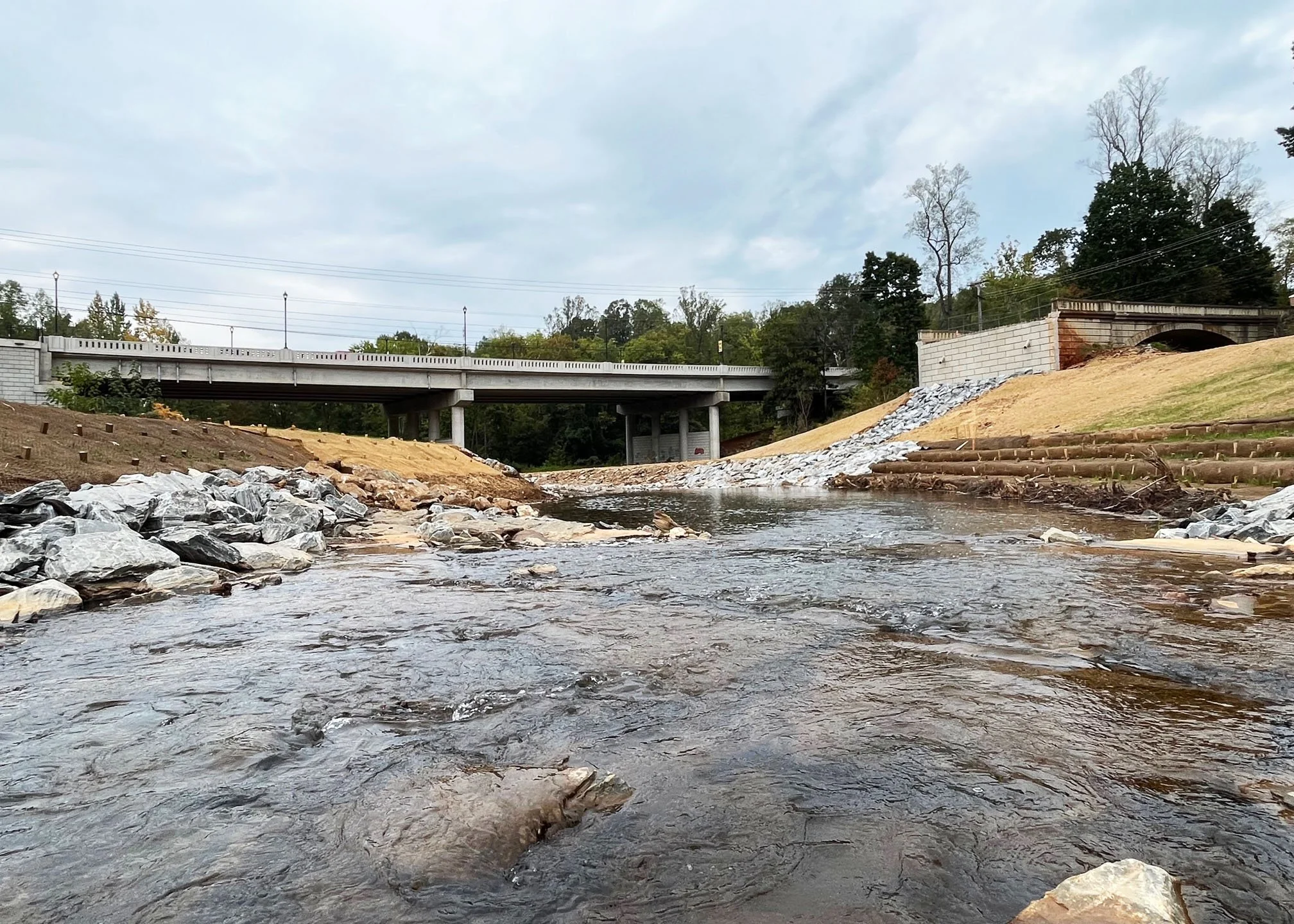
· Construction of a new, stabilized stream channel for Blackwater Creek
· Stabilization of the floodplain area surrounding Blackwater Creek
· Creation of new wetlands to improve water quality and encourage wildlife habitat
· Stabilization of the former Lakeside Drive bridge as a future overlook
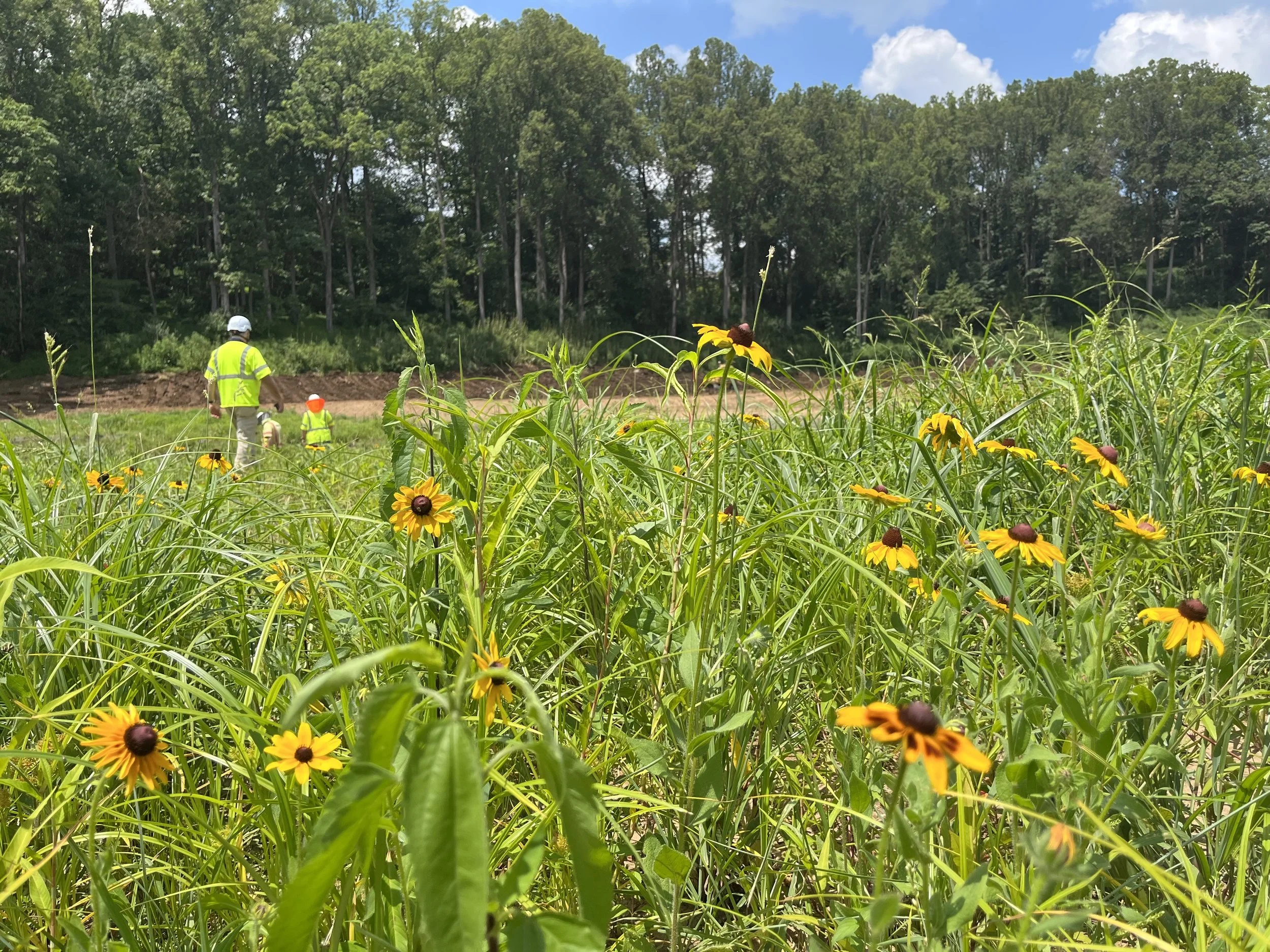
“One of the biggest takeaways from this project is that, while public safety was top of mind with the dam’s removal, the restoration of Blackwater Creek and the wetlands around it really focused on environmental protection and water quality for the Blackwater Creek, the James River and the Chesapeake Bay,” said Hawkins. “We’re already seeing this area come to life with native plants, pollinators, and wildlife.”
The project was done in collaboration with University of Lynchburg and in consultation with environmental engineering firm AECOM and construction management by MBP. Construction was completed by English Construction and subcontractor Resource Environmental Solutions. The City also coordinated with multiple agencies, including the Department of Conservation and Recreation Dam Safety, the Department of Environmental Quality, the U.S. Army Corps of Engineers, and the Federal Emergency Management Agency.
Additional plantings of native grasses, shrubs, and trees are scheduled for late winter/early spring. Because of this, and separate work happening on the Creekside Trail, the work area and trail remain closed to the public until further notice. The best location to see the newly stabilized Blackwater Creek and surrounding wetlands is from the sidewalk along the new Lakeside Bridge.
The City of Lynchburg plans to celebrate the completion of this important project in the spring of 2026 as a new growing season begins to showcase the rebirth of College Lake’s former lakebed
JULY 2024


College Lake Dam Removal Project Moves Into Stream & Wetland Restoration Phase
A new chapter is being written in the history of Lynchburg’s beloved Blackwater Creek. Its future is taking shape – literally – in the lakebed of the former College Lake, giving a glimpse of what it may have looked like before the dam was built.
With the removal of College Lake Dam completed in May 2024 and the Blackwater Creek flowing freely again for the first time in 90 years, the focus of the dam removal project has shifted to restoration of the stream and wetlands to create a new, thriving ecosystem.
Lynchburg Water Resources is contracting with WC English Construction and Resource Environmental Solutions (RES) on the stream and wetland restoration, which is scheduled to be completed in July 2025. AECOM, an environmental engineering firm, is on site to perform full-time construction observation and inspection.
“The goals for this project were to create an ecosystem that blended both upstream and downstream together. So that one day, as this site matures, it will seem that there wasn’t a lake here at all,” said Erin Hawkins, Water Quality Manager for Lynchburg Water Resources. “The native plantings and creation of wetlands are being done in a way that mimics that of a natural system.”
The work in this phase includes:
Building a new stream channel for Blackwater Creek through the existing lakebed
Stabilizing the floodplain area
Creating new wetlands
Removing and managing legacy sediment in the lakebed
Stabilizing the former Lakeside Drive bridge as a future overlook
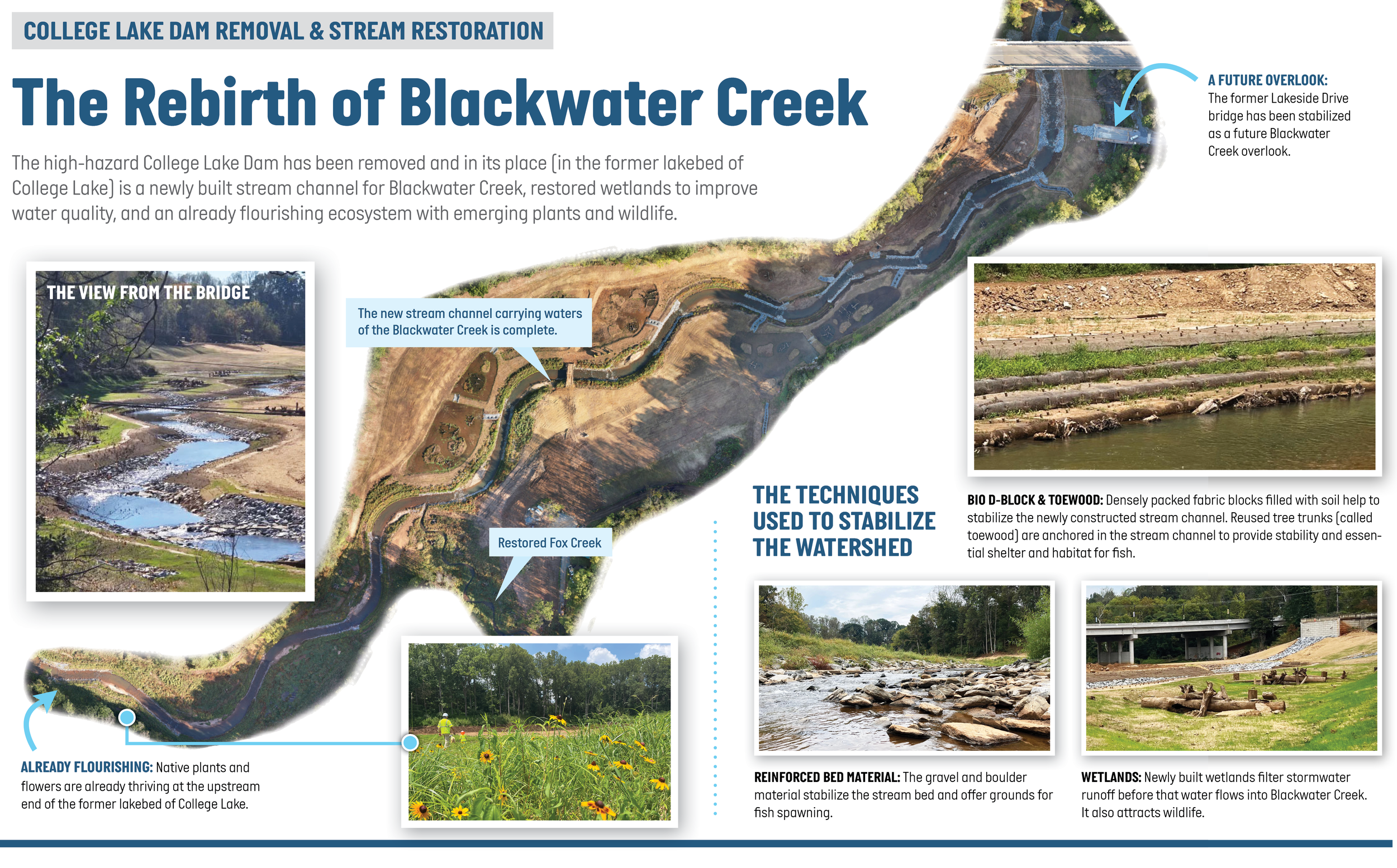
Restoration work has been completed at the upstream section of the former lake and is working its way toward the former dam site. Along the way, RES is using bioengineering bank stabilization techniques as it builds the new stream channel for the Blackwater Creek. These techniques – including installation of toewood, erosion control practices, and placement of gravel and boulders in the stream bed – will protect the stream banks from erosion and create essential shelter and habitat for fish, insects, and other aquatic life. (See the graphic above for an explanation of these techniques).
The restoration also includes the creation of new wetlands in the former lakebed. Native plantings, including wetland grasses, live stakes, trees, and vegetation will be planted throughout the project to stabilize the area and provide a healthy new habitat for local wildlife.
Once LWR’s restoration project is complete, the University of Lynchburg will take over the long-term management and stewardship of the project area.
APRIL 16, 2026
City of Lynchburg Celebrates New Chapter for Blackwater Creek After College Lake Dam Removal
The City of Lynchburg marked a major milestone in public safety and environmental stewardship with a ribbon-cutting ceremony on Thursday, April 16, celebrating the completion of the College Lake Dam Removal and Blackwater Creek Stream Restoration project.
Held at the former Lakeside Drive bridge overlooking a reconnected Blackwater Creek, the event brought together elected officials, City and state leaders, project partners, the University of Lynchburg, and community stakeholders to recognize the successful transformation of the former College Lake into a restored stream and wetland system.
The removal of the high-hazard College Lake Dam was driven by the need to meet dam safety regulations and following the dam’s overtopping during a 2018 storm event, which posed a significant risk to residents and properties downstream.
“This project has made our community safer,” said Mayor Larry Taylor, in remarks to a crowd of over 50 gathered Thursday. “Removing the dam reduced flood risk for our families downstream. … We are blessed to live in such a place that cares so much about our people, our water, our future.”
In addition to addressing a critical safety concern, the project reestablishes Blackwater Creek as a free-flowing stream for the first time in more than 90 years.
“What makes this project special was that we didn't stop at solving the problem. We took the opportunity to create something better,” said City Manager Wynter Benda. “What was once a lake is now a reconnected stream system supported by stabilized banks and newly created wetlands that will protect water quality, support wildlife, and strengthen the overall health of this watershed.”
Tim Mitchell, Director of Lynchburg Water Resources, recognized many partners who contributed to this project, including the University of Lynchburg, AECOM, MPB, English Construction, RES, the Department of Environmental Quality, the Department of Conservation and Recreation, and other City departments, including Parks & Recreation and Public Works.
“This was no small undertaking. From the very beginning, it required thoughtful planning, strong partnerships, and a shared commitment to seeing it through,” Mitchell said.
Mitchell concluded his remarks saying, “Today, we celebrate not just the completion of a project, but the beginning of a new chapter—for this stream, for our environment, and for our community.”
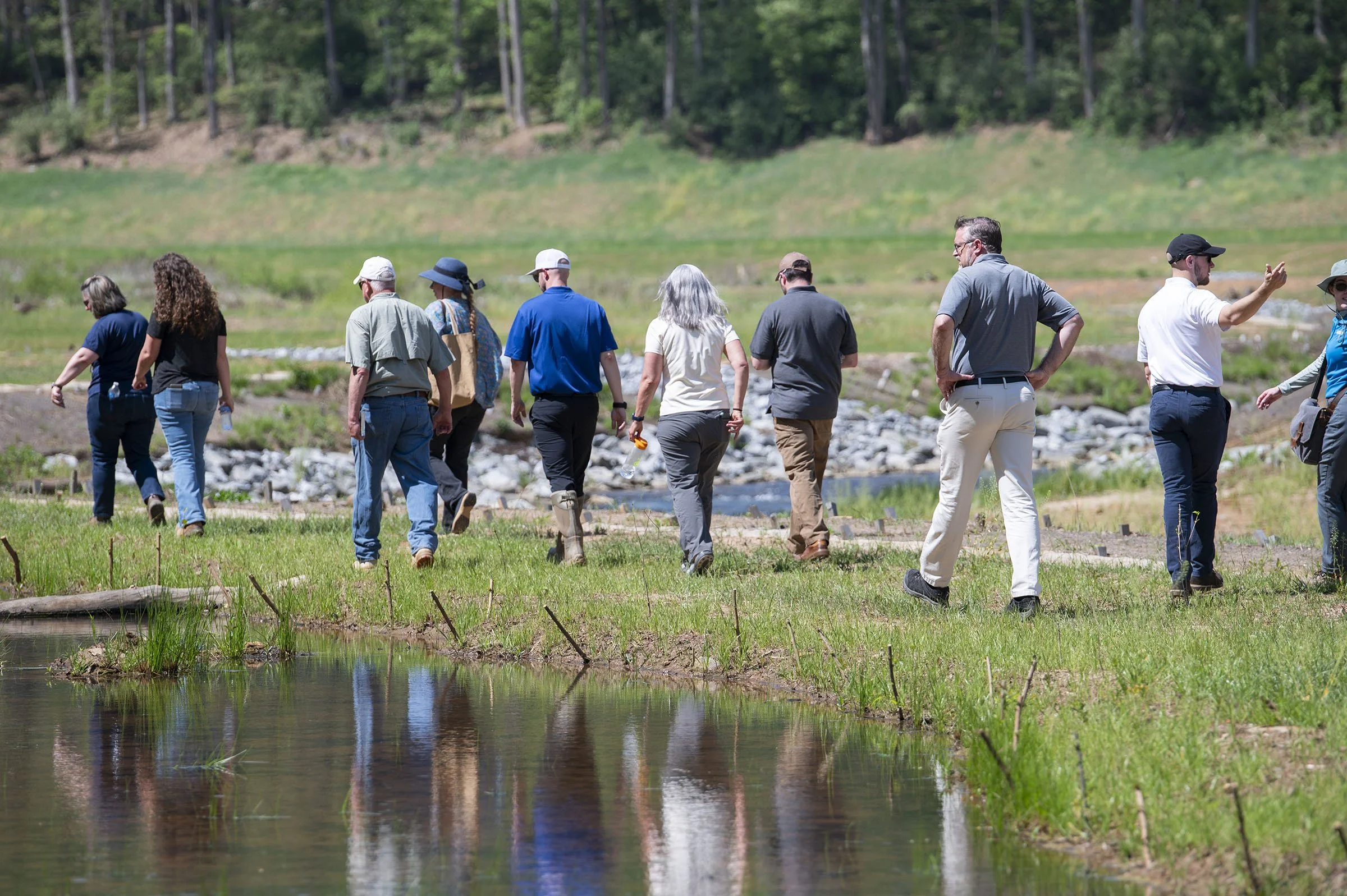
Following the ceremony, attendees participated in a guided tour of the restored stream and wetlands led by project manager Erin Hawkins of Lynchburg Water Resources, who managed the project from the early planning through completion.

